
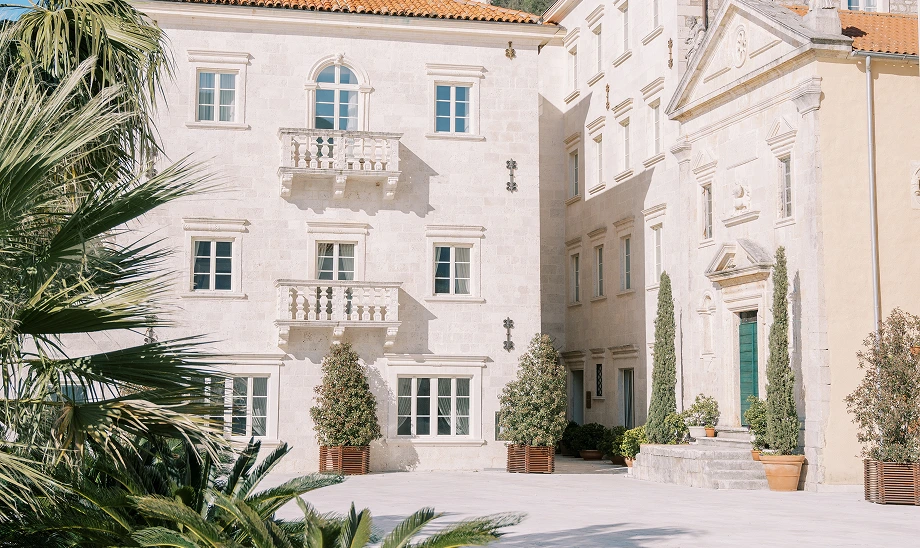
Walk through any Dalmatian village and you’ll see it – centuries-old stone houses that have weathered wars, earthquakes, and countless summers. The material that built them isn’t decorative. It’s structural, functional, and deeply connected to this land.
Today, we have access to every building material imaginable. Concrete, steel, glass, composites. Yet at Atrij Architects, we keep returning to stone. Not out of nostalgia – but because it still makes sense.
Here’s why traditional stone remains essential to modern Croatian architecture.
It Belongs Here
Croatian stone – whether the white limestone of Brač, the warm tones of Dalmatian karst, or local Zadar varieties – comes from this landscape. When we build with it, structures feel rooted rather than imposed.
Modern villas that use local stone don’t compete with their surroundings. They settle into the hillside, echo the colour of nearby village walls, and age alongside the olive groves. This isn’t something you can replicate with imported materials or surface cladding.

Thermal Performance That Works With the Climate
Stone breathes. Its thermal mass absorbs heat during the day and releases it slowly at night – a natural cooling system perfected over millennia of Mediterranean construction.
In an era of rising energy costs and environmental awareness, this matters. A well-designed stone house requires less mechanical cooling, stays comfortable through summer heat, and retains warmth in winter. It’s sustainable building that predates the term.
Durability Measured in Centuries
Concrete has a lifespan. Render cracks. Trends fade. Stone endures.
The houses built by our grandparents’ grandparents still stand. With proper construction, there’s no reason a stone building completed today won’t serve generations to come. In a world of disposable architecture, that permanence carries real value — both practical and emotional.
Modern Design, Traditional Material
Using stone doesn’t mean building like it’s 1850. Contemporary architecture embraces clean lines, open plans, and large glass surfaces – all of which pair beautifully with stone when handled thoughtfully.
The contrast between raw stone walls and minimal interiors creates warmth without clutter. Stone anchors a space, giving modern design a sense of weight and history it often lacks.
At Atrij, we’ve spent three decades finding this balance – honouring traditional craft while designing for how people live today.
Craftsmanship That Can’t Be Automated
Working with stone requires skill. Local masons understand how to select, cut, and lay stone in ways that machines can’t replicate. This knowledge has been passed down through generations, and every project that uses it helps keep the craft alive.
When you build with stone, you’re investing in more than a material. You’re supporting a tradition – and that shows in the finished work.
Building for the Next Century
Trends come and go. What remains is what was built to last.
Traditional stone connects modern Croatian architecture to its roots — to the landscape, to local craft, and to a building philosophy that values endurance over novelty. It’s not the only material we use, but it’s often the foundation we build upon.
If you’re considering a project on the Adriatic coast, we’d love to discuss how stone might shape your vision.