


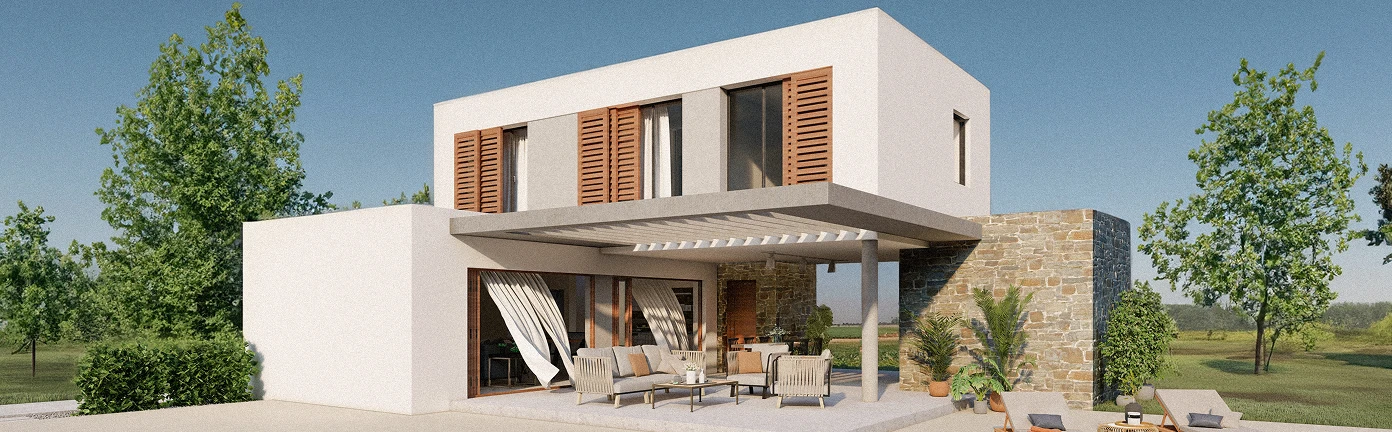
The Dalmatian coast has always attracted people who want to live close to the sea. But what they want to build, and how they want to live, keeps evolving.
Over the past few years, we’ve seen clear shifts in what clients ask for. Some trends are driven by technology. Others by climate. Many reflect a deeper desire for homes that feel connected to place rather than imported from elsewhere.
At Atrij, we’ve been designing summer houses in Croatia for over three decades. Here are five trends shaping the villas we’re designing in 2025, and why they matter.
1. Indoor-Outdoor Living as Standard
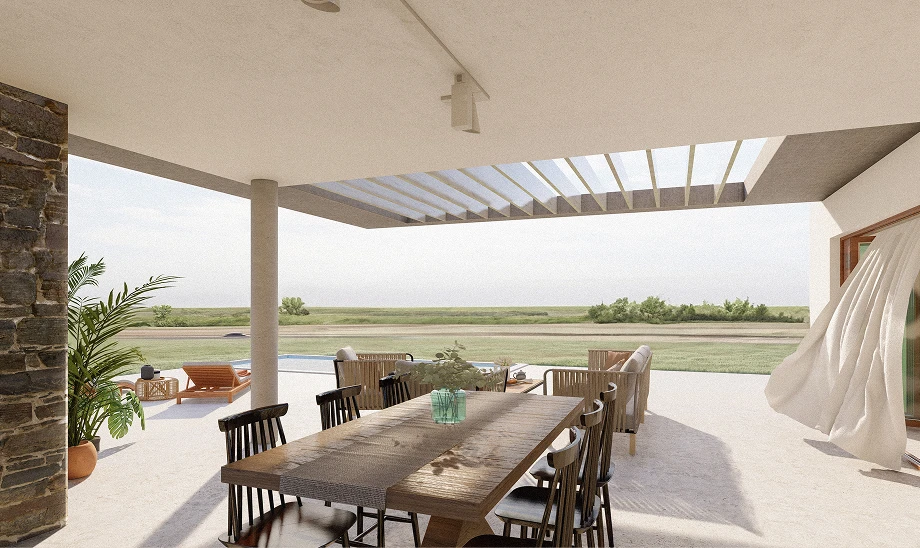
The line between inside and outside continues to dissolve. Clients no longer want a house with a terrace; they want a house that is a terrace.
This means full-height sliding glass walls that open entire rooms to the outdoors. Covered outdoor living areas equipped with kitchens, dining spaces, and lounging zones. Courtyards that function as open-air rooms at the heart of the home.
In Dalmatia’s climate, this makes perfect sense. The weather invites outdoor living eight months of the year. Architecture that embraces this — rather than treating outside as separate, creates homes that feel larger, more connected, and more attuned to Mediterranean life.
2. Sustainability Beyond the Buzzword
Sustainability used to be a checkbox. Now it’s a core design driver.
Clients increasingly ask about energy performance, water management, and material sourcing — not as afterthoughts but as priorities. Solar panels are standard. Rainwater harvesting is common. Heat pumps and underfloor heating have replaced less efficient systems.
But the most sustainable choice is often the oldest: building with thermal mass. Stone walls that absorb heat during the day and release it at night. Proper orientation that reduces cooling loads. Cross-ventilation is designed into the floor plan. These passive strategies, refined over centuries of Mediterranean building, remain the foundation of sustainable design here.
3. Local Materials, Contemporary Expression
The backlash against the generic international style is real. Clients who once wanted villas that could be anywhere now want homes that could only be here.
This means a return to local stone — not as nostalgic decoration but as a primary building material. It means dry stone walls, native landscaping, and colour palettes drawn from the surrounding landscape.
But “local” doesn’t mean backwards-looking. The best contemporary villas combine traditional materials with modern forms — clean lines, open plans, minimal details. The result is architecture that feels rooted in Dalmatia while living firmly in the present.
4. Smart Homes, Invisible Technology
Home automation has matured. Clients expect integrated systems for lighting, climate, security, and entertainment — but they don’t want their house to feel like a gadget.
The trend is toward invisible technology. Controls that disappear into walls or operate through voice and phone. Systems that anticipate needs rather than requiring constant management. Infrastructure that’s future-proof but doesn’t dominate the aesthetic.
For summer houses, especially, often occupied seasonally or rented part of the year, smart systems add practical value: remote monitoring, automated maintenance modes, and energy management when the house is empty.
5. Wellness Spaces as Essentials
The pandemic accelerated a shift that was already underway: homes as retreats for physical and mental wellbeing.
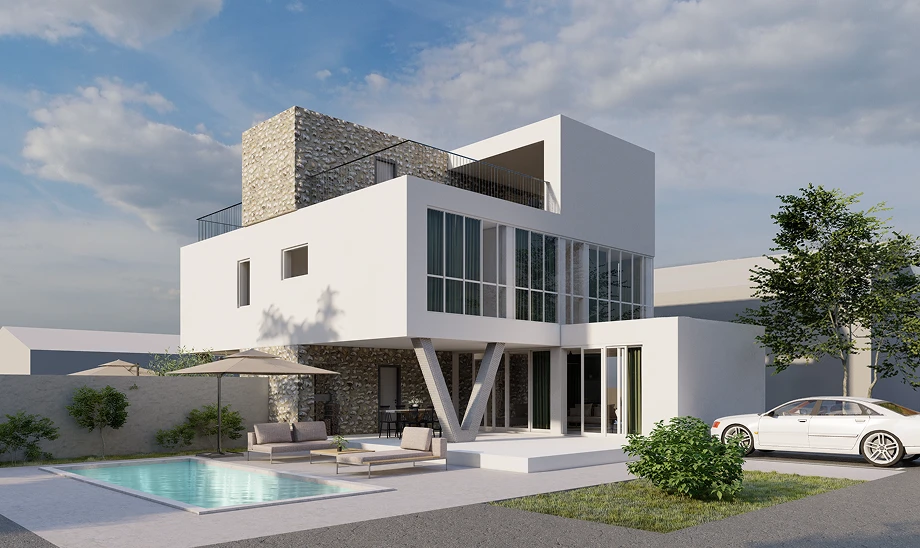
Pools were once luxuries. Now they’re expected — and increasingly accompanied by spas, saunas, cold plunge pools, and dedicated fitness spaces. Outdoor showers, yoga decks, and meditation gardens have moved from resort amenities to residential requests.
These aren’t just features — they reflect a broader understanding of what a summer house is for. Not just a place to stay, but a place to restore. Architecture that supports wellness, through both dedicated spaces and overall atmosphere, is now central to the brief.
Trends Fade, Principles Endure
Every year brings new influences. Some become lasting shifts; others disappear within a season. At Atrij, we pay attention to trends — but we design for decades.
The villas we create in 2025 respond to current desires while remaining grounded in principles that don’t change: respect for landscape, honest materials, thoughtful proportion, and spaces that serve real life rather than photographs.
If you’re considering a summer house on the Croatian coast, we’d enjoy discussing how these ideas might shape your project.