


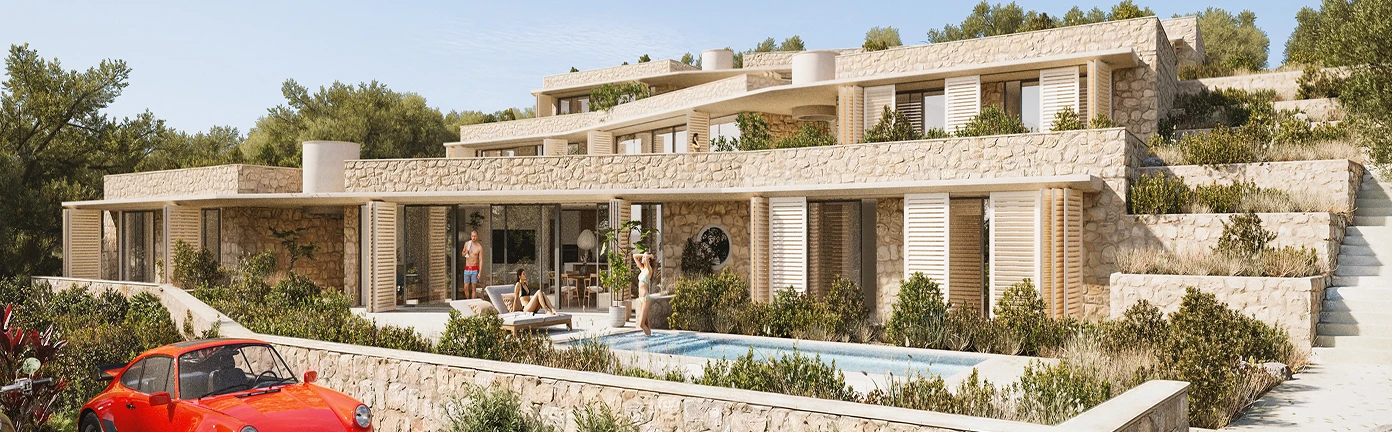
The best architecture doesn’t shout. It listens, to the land, the light, and the life that will unfold within its walls.
On the Dalmatian coast, this philosophy isn’t optional. It’s essential. The landscape here is ancient, dramatic, and unforgiving of design that ignores it. A villa that fights its surroundings will always feel out of place. One that embraces them becomes part of something larger.
At Atrij, we’ve spent over 30 years learning how to design villas that belong, structures that feel inevitable rather than imposed. Here’s how we do it.
We Start With the Land, Not the Floor Plan
Every project begins with the site. Before we discuss room layouts or square metres, we walk the land. We study the slope, the stone outcrops, the existing vegetation. We note where the sun rises, how the wind moves, which angles frame the sea.
This isn’t reconnaissance, it’s listening. The land tells us where the building wants to sit, how it should be oriented, what it should protect and what it should reveal.
Clients sometimes arrive with a Pinterest folder full of villas. That’s useful. But the design that emerges will be shaped first by this specific place, not by images from somewhere else.
We Use What’s Already There
Dalmatia has its own material palette, limestone, dry stone walls, native greenery like olive, lavender, and rosemary. These elements have defined the region’s architecture for centuries because they work.
We don’t import marble from Italy or timber from Scandinavia to make a statement. We build with local stone that matches the colour of the hillside. We retain existing olive trees and design around them. We use dry stone walls not as decoration but as functional elements, retaining slopes, defining terraces, connecting new construction to ancient patterns.
The result is architecture that feels grown rather than built.
We Design Low and Follow the Terrain
The Dalmatian coast is not a place for towers. Our villas stay low, often single-storey, following the natural contours of the land. Rooflines echo the slope of the hillside. Buildings step down with the terrain rather than flattening it.
This approach isn’t about hiding. It’s about proportion. A low-slung villa framed by olive trees and stone walls has presence without dominance. It commands the view rather than competing with it.
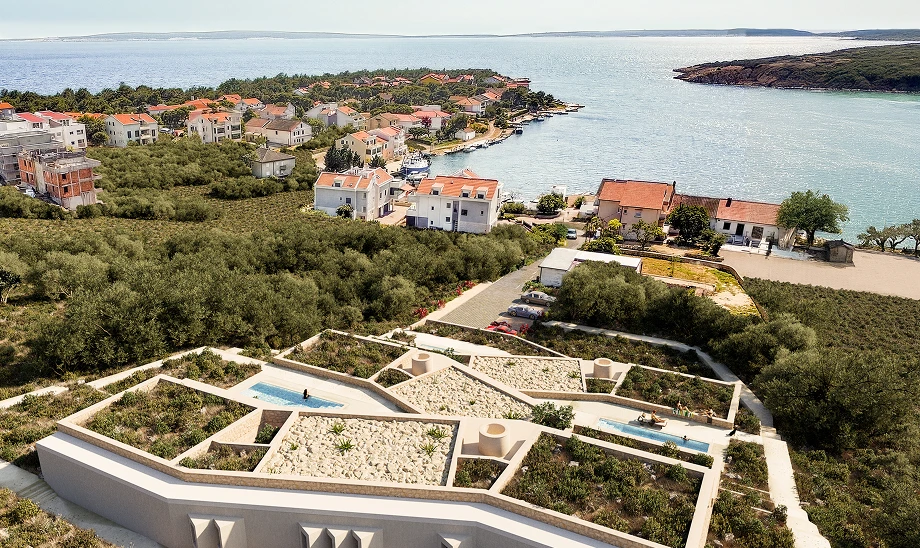
We Let the Landscape In
The boundary between inside and outside should feel soft. We design for indoor-outdoor living — deep terraces, sliding glass walls, shaded courtyards that function as open-air rooms.
When you’re inside one of our villas, you’re still connected to the land. The sea is framed through carefully positioned windows. Breezes move through. The scent of rosemary drifts in from the garden. The building doesn’t separate you from Dalmatia, it immerses you in it.
We Think in Decades, Not Trends
A villa that “disappears” into the landscape must also disappear into time. That means avoiding fashionable details that will date the building within a decade.
We favour materials that age well, stone that develops patina, wood that silvers naturally, plaster that softens over years. We design forms that are simple enough to remain relevant as styles shift around them.
Thirty years from now, a well-designed villa should look better than it did on completion, more settled, more at home, more inevitable.
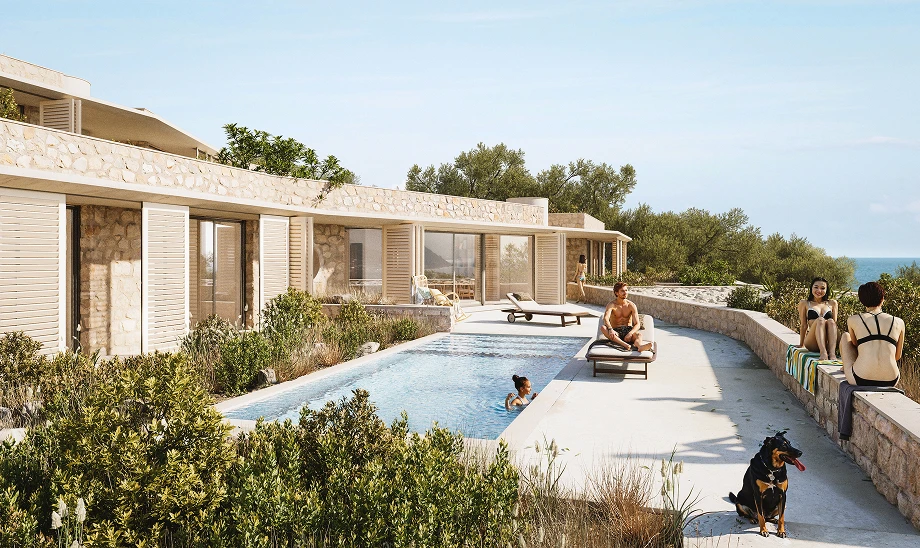
The Goal Isn’t Invisibility
When we talk about villas that “disappear,” we don’t mean buildings that go unnoticed. We mean architecture that belongs so completely to its place that it feels like it couldn’t exist anywhere else.
That’s the standard we hold ourselves to on every project. Not just a beautiful house, but a house that makes the landscape more beautiful for being there.
If you’re considering building on the Dalmatian coast, we’d welcome the chance to walk your land with you.