


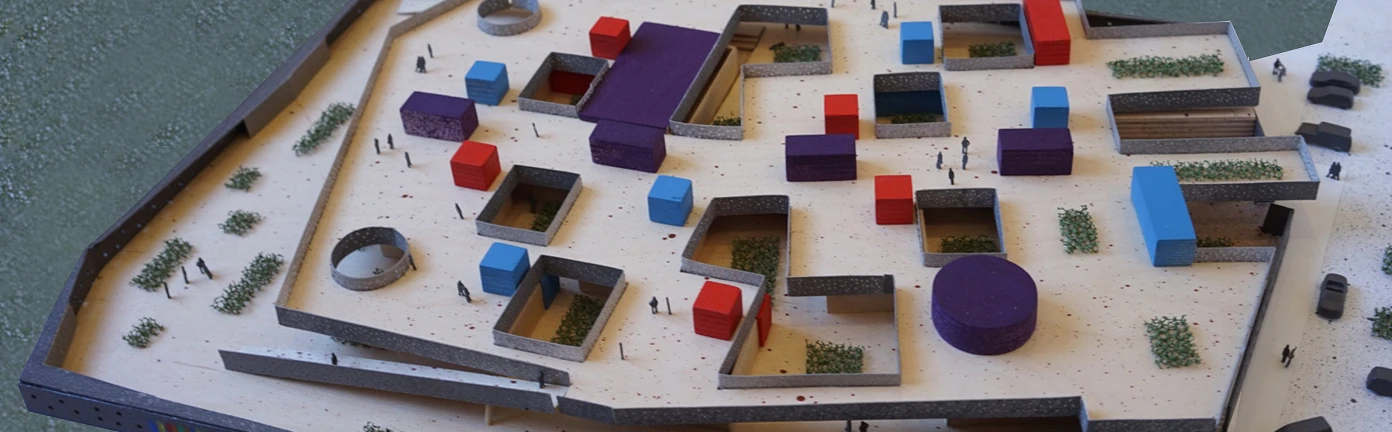
A kindergarten is a child’s first built environment outside the home. It’s where they take their first steps into independence — learning to navigate a world that isn’t shaped entirely around them.
That transition matters enormously. A well-designed kindergarten doesn’t just contain children. It supports them. It creates an environment where they feel secure enough to explore, curious enough to learn, and comfortable enough to be themselves.
At Atrij, we’ve designed kindergartens like Ciciban and Grigor Vitez with this philosophy at the centre. Here’s what we’ve learned about creating spaces where young children can truly thrive.
Safety Is the Foundation – But Not a Cage
Children need to feel safe. But safety in kindergarten design isn’t about restriction — it’s about creating an environment where children can move freely without constant adult intervention.
This means thoughtful details: rounded corners, non-slip surfaces, child-height railings, secure outdoor boundaries. It means clear sightlines so caregivers can observe without hovering. It means spaces that allow independence while quietly protecting.
When safety is embedded in the architecture, children sense it intuitively. They relax. They explore. They don’t need to be told “be careful” every few minutes because the space itself has already taken care.
Scale Changes Everything
Adults forget how big the world feels to a three-year-old. Standard ceiling heights feel cavernous. Adult-sized furniture is uncomfortable. Long corridors can feel intimidating.
We design kindergartens at child scale. That means lower ceilings in intimate spaces — reading nooks, quiet corners, rest areas. It means windows positioned so children can see out without climbing. It means furniture, fixtures, and handles proportioned to small hands.
When the built environment fits their bodies, children gain confidence. They can reach things, open things, navigate independently. The space tells them: this place is for you.
Light Shapes Mood and Learning
Natural light isn’t optional in kindergarten design — it’s fundamental. Research consistently shows that daylight improves mood, attention, and even immune function in young children.
We maximise natural light in every project. Large windows, skylights, and glass doors bring the outside in. But we also control light carefully — avoiding harsh glare, creating softer illumination in rest areas, using orientation to capture gentle morning sun rather than intense afternoon heat.
The quality of light in a room affects how children feel in it, even if they can’t articulate why. We design for that subtle but powerful influence.
Defined Spaces for Different Activities
Young children benefit from environments with clear spatial logic. They need to understand intuitively where different activities happen — where to play actively, where to be quiet, where to eat, where to rest.
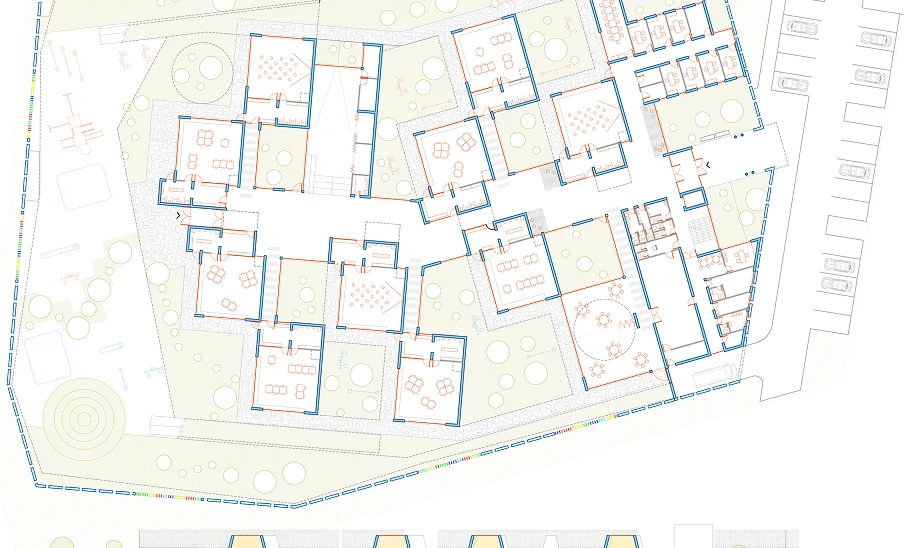
We create this through architectural definition rather than just furniture arrangement. Changes in ceiling height, floor material, colour, and light signal transitions between zones. A reading corner might have a lowered ceiling and carpet. A movement area might have higher ceilings and resilient flooring.
This legibility helps children self-regulate. They learn to match their behaviour to the space without constant instruction.
Nature Belongs Inside and Out
Children have an innate connection to nature that modern life often suppresses. Kindergartens should nurture that connection, not sever it.
We bring nature into the building through materials — wood, natural textiles, plants. We maximise visual connections to outdoor greenery. And we design outdoor spaces as carefully as indoor ones: gardens for exploration, natural play elements, surfaces that invite touch and discovery.
At Ciciban Kindergarten, outdoor areas aren’t afterthoughts — they’re integral learning environments. Sand, water, vegetation, and open space offer experiences that no interior room can replicate.
Colour as a Tool, Not Decoration
Colour in kindergartens is often handled poorly — either institutional beige that deadens the spirit or chaotic rainbows that overstimulate.
We use colour intentionally. Certain hues energise; others calm. Colour can define zones, aid wayfinding, and create emotional variety as children move through the building.
Our approach is considered rather than timid or excessive. Accent colours mark transitions and special spaces. Calmer tones dominate areas for rest and focus. The result is an environment that feels alive without overwhelming developing nervous systems.
Flexibility for Evolving Needs
Teaching methods change. Group sizes fluctuate. Activities vary throughout the day.
We design kindergartens with built-in flexibility — movable partitions, multi-purpose rooms, furniture that can be reconfigured. A space used for structured learning in the morning can become a movement area in the afternoon. Rooms can adapt as educational philosophies evolve.
Rigid architecture creates rigid programming. Flexible architecture gives educators freedom to respond to children’s needs in the moment.
Acoustic Comfort Matters
Kindergartens are noisy. Children shout, laugh, cry, and play — often simultaneously. Without acoustic consideration, this becomes exhausting for everyone.
We address acoustics through materials and spatial design. Sound-absorbing surfaces in ceilings and walls. Separation between noisy and quiet zones. Nooks where children can retreat from stimulation.
Good acoustics don’t mean silence. They mean an environment where sound is managed — where a child’s voice can be heard without shouting, and where quiet concentration is possible alongside active play.
Spaces That Say “You Belong Here”
Every design decision in a kindergarten sends a message to the children who use it. Uncomfortable furniture says they’re an afterthought. Institutional aesthetics say this is a place to be managed. Dark, cramped spaces say their needs don’t matter.
We design kindergartens that send a different message: this place was made for you. Spaces that welcome, support, protect, and inspire. Environments where children feel safe enough to explore and valued enough to grow.
If you’re planning a kindergarten or early childhood facility in Croatia, we’d welcome the opportunity to discuss how architecture can support your educational vision.