


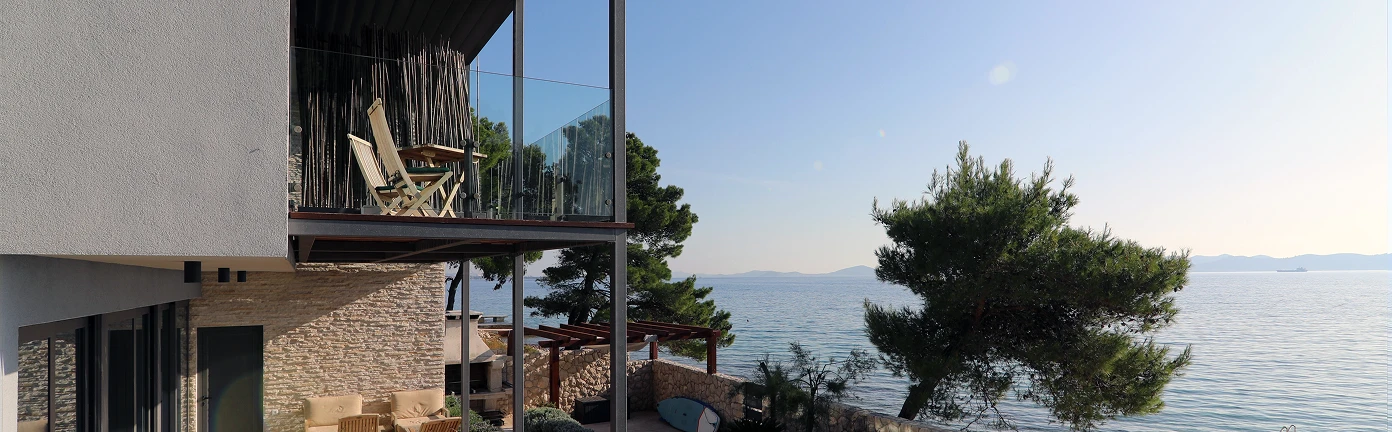
Everyone wants the sea view. It’s the reason most people build on the Dalmatian coast in the first place — that expanse of blue, the islands on the horizon, the light that changes hour by hour.
But a view is not a given. It’s a design decision. The same plot can yield a villa with breathtaking panoramas or one where the sea feels strangely distant. The difference lies in positioning, orientation, and, most importantly, framing.
At Atrij, we’ve spent over 30 years learning how to capture the Adriatic. Here’s how we approach the art of framing the sea.
The View Starts With the Site
Before we think about windows or terraces, we walk the land. Every plot has its own relationship with the water — angles that reveal the full sweep of the coast, others that offer intimate glimpses between trees, some that catch the sunrise, others the sunset.
We study these conditions obsessively. Where does the sea appear most dramatic? Where does it feel most serene? How does the view change as you move across the site? What’s visible from ground level versus elevated positions?
These questions shape everything that follows. The building’s position on the plot isn’t arbitrary — it’s the first and most consequential design decision.
Not Every Room Needs the Same View
A common mistake is treating the sea view as a single asset to be maximised everywhere. But living with a view is more nuanced than that.
The living room might want the full panorama, expansive glazing that brings the horizon inside. But a bedroom might benefit from a more intimate framing — a carefully placed window that reveals a slice of blue upon waking. A bathroom might capture a private glimpse. A study might face the garden instead, offering visual rest.
We think about how each space will be used, at what times of day, and what relationship with the sea serves that use best. The result is a house with varied experiences rather than monotonous exposure.
Windows Are Frames, Not Holes
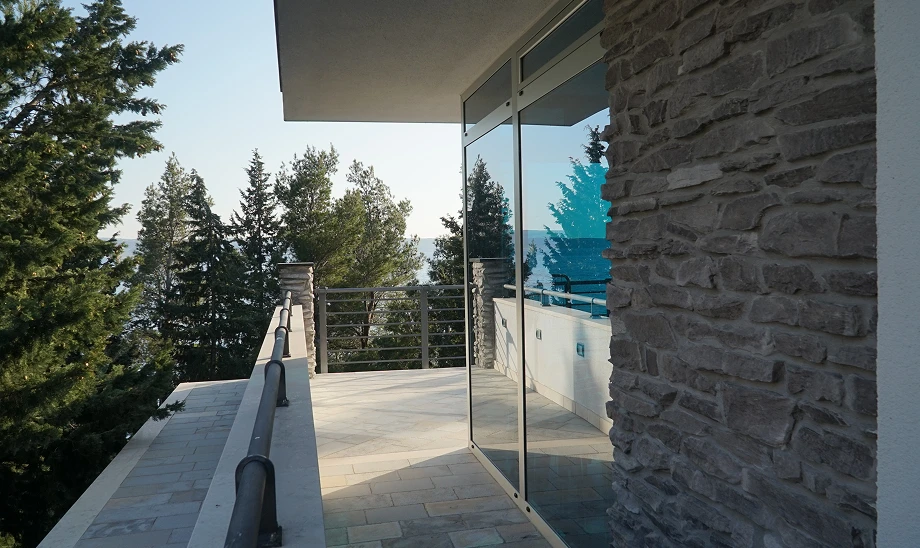
A window is not simply an opening for light. It’s a frame — and what you include or exclude from that frame matters enormously.
We design windows to compose views intentionally. Sometimes that means a floor-to-ceiling expanse that erases the boundary between inside and out. Other times it means a precisely proportioned opening that isolates a specific element — a single island, a cluster of pines, the line where sea meets sky.
The edges of a window direct attention. A view that might feel ordinary through generic glazing becomes art when properly framed.
Terraces Extend the Frame
The indoor view is only part of the story. Terraces, balconies, and outdoor living spaces extend the framing into three dimensions.
We design outdoor spaces that shape how you experience the sea — low walls that define the edge without blocking sightlines, pergolas that frame the sky, planting that creates foreground depth. The relationship between where you sit and what you see is choreographed, not accidental.
A well-designed terrace doesn’t just offer a view. It positions you within a composition.
Light Is Part of the View
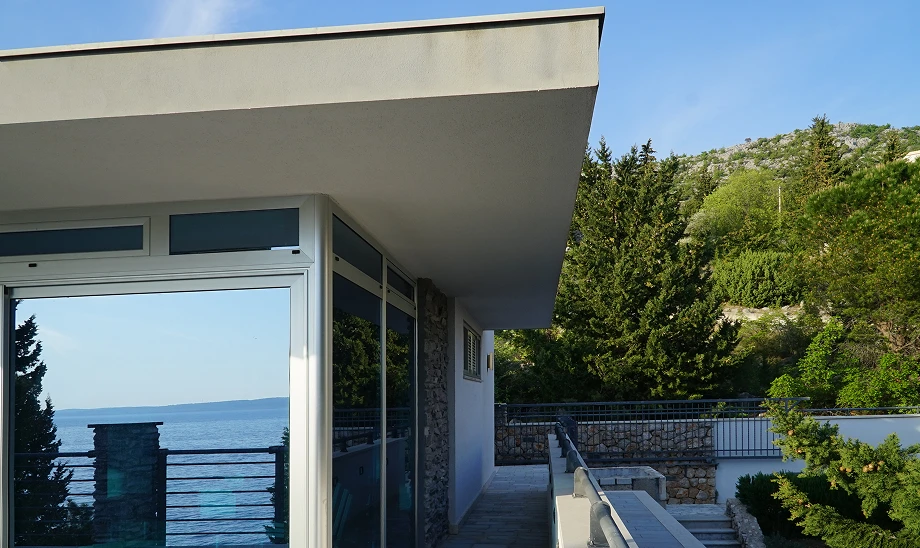
The Adriatic isn’t one colour. It shifts from pale turquoise to deep navy to silver to gold depending on time of day, season, and weather. The light on the Dalmatian coast is famously intense — but intensity isn’t the same as quality.
We orient buildings to capture the best light at the times that matter most. Morning sun in bedrooms. Soft afternoon light in living spaces. The golden hour on the main terrace. Protection from harsh midday glare.
The view and the light that illuminates it are inseparable. Designing for one without the other misses the point.
Sometimes the Best Move Is Restraint
Not every wall should be glass. Not every room should face the sea. Part of what makes a view powerful is contrast — the moment of revelation when you move from an enclosed space into one that opens dramatically.
We often design entrance sequences that deliberately hold back the view, releasing it at a specific moment. You might enter through a courtyard, move through a sheltered corridor, and only then arrive at the living space where the sea suddenly appears in full.
This choreography of compression and release gives the view emotional impact it wouldn’t have if it were visible from the front door.
Framing the Sea, Not Fighting It
The goal isn’t to dominate the landscape with the biggest possible windows. It’s to create a dialogue between architecture and environment — one where the building enhances your experience of the sea rather than merely exposing you to it.
A villa that frames the Adriatic thoughtfully becomes a lens. It focuses attention, shapes experience, and transforms a beautiful location into something more: a place where you feel the sea as part of daily life.
Your View, Designed
Every site is different. Every client’s relationship with the sea is personal. What we offer is three decades of experience reading the Dalmatian coast, understanding its light, its angles, its moods, and translating that understanding into architecture.
If you’re building on the Croatian coast and want a villa that captures the Adriatic at its best, we’d welcome the chance to walk your land and show you what’s possible.